logo
Home ProductsPlastic Mixer Machine

SHR-2000 High-Speed Powder Modification Mixer for Dust Free Operation in Plastic Processing

Certification
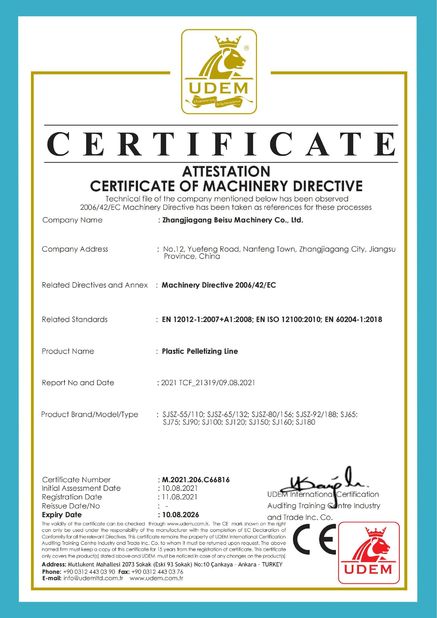
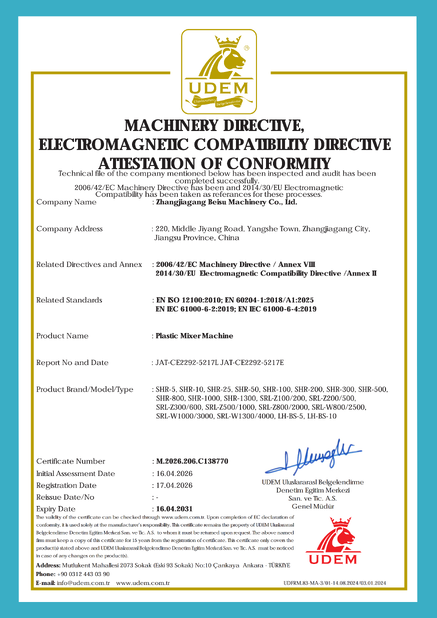
China Zhangjiagang Beisu Machinery Co., Ltd. certification
The quality of the machine of Beisu Machinery is very stable, the output is high, the details are very user friendly, and they provide a quick response when we need service.

—— Ahmed Zeitoun

The quality of the high speed mixer produced by Beisu Machinery is outstanding. We have ordered 3 sets of equipment and they are all in use. Maria provides our professional and prompt after sales service.

—— Adrew

I'm Online Chat Now

SHR-2000 High-Speed Powder Modification Mixer for Dust Free Operation in Plastic Processing

SHR-2000 High-Speed Powder Modification Mixer for Dust Free Operation in Plastic Processing
SHR-2000 High-Speed Powder Modification Mixer for Dust Free Operation in Plastic Processing SHR-2000 High-Speed Powder Modification Mixer for Dust Free Operation in Plastic Processing SHR-2000 High-Speed Powder Modification Mixer for Dust Free Operation in Plastic Processing SHR-2000 High-Speed Powder Modification Mixer for Dust Free Operation in Plastic Processing SHR-2000 High-Speed Powder Modification Mixer for Dust Free Operation in Plastic Processing SHR-2000 High-Speed Powder Modification Mixer for Dust Free Operation in Plastic Processing

Large Image :  SHR-2000 High-Speed Powder Modification Mixer for Dust Free Operation in Plastic Processing

Product Details:
Place of Origin: China
Brand Name: BEISU
Certification: CE
Model Number: SHR-2000
Payment & Shipping Terms:
Minimum Order Quantity: 1 set
Price: USD28000
Packaging Details: Wood pallet and film cover
Delivery Time: 35 working days
Payment Terms: L/C,T/T
Supply Ability: 10 sets per month
Detailed Product Description
Modifier Dosage: 0.5% - 2.0% By Weight Weighing Accuracy: ± 0.2% - 0.5% (GIW), ± 1 G - 5 G (LIW)
Activation Index: > 98% - 99% Mixing Temperature: 80°C–130°C
Cooling Temperature: 40°C - 50°C Processing Capacity: 1 - 10 Tons/hour
Highlight:

High-Speed Powder Modification Mixer

,

Dust Free Powder Modification Mixer

,

High-Speed Plastic Mixer Machine

SHR-2000 Powder Modification Dust Free Feeding Mixing Machine
Powder modification and high-speed mixing systems are widely used across various heavy industrial sectors to transform low-cost inorganic powders into functional fillers and active materials.
Industry Applications
Industry Sector Primary Minerals Powder Common Modifying Agent Operational Objective
Plastics (PVC, PE, PP) Ground CaCO₃, Talc Stearic Acid, Paraffin Wax Hydrophobic transition, lower melt viscosity, high filler loading
Rubber & Tyres Precipitated Silica, Clay Silane Coupling Agents Covalent resin bonding, tensile strength, wear resistance
Paints & Coatings TiO₂, Barium Sulfate Titanates, Polyethylene Wax Anti-settling, high gloss, particle dispersion
Adhesives & Sealants Nano CaCO₃, Silica Silanes, Fatty Acids Rheology control, anti-sagging, mechanical reinforcement
Powder modification and mixing systems (also known as powder surface coating or surface treatment systems) are used to alter the surface chemical properties of fine inorganic and organic powders. These systems apply modifiers—such as silane coupling agents, titanates, stearic acid, or paraffin—to the surfaces of powder particles to improve their dispersibility, hydrophobicity, flowability, and compatibility with polymer matrices.
System Architecture and Process Flow
Powder surface modification relies on the synergistic coordination of loss-in-weight feeding, high-shear dispersion driven by thermal and kinetic energy, and subsequent de-agglomeration processes:
[ Powder Loss-in-Weight Feeder ] ──┐
├──> [ High-Shear Coating Mill / Mixer ] ──> [ Cyclone Separation ] ──> [ Bagging System ]
[ Atomized Modifier Injection ] ──┘ (Thermal Transfer & Dispersion) (Dust Extraction)
  • Precision Feeding (Loss-in-Weight): Powder is conveyed at a constant mass flow rate, while liquid or solid modifiers are added—via atomization or metered dosing—at precise ratios (typically 0.5%–2.0% by weight).
  • Preheating and Activation: Frictional kinetic energy within the mixing chamber or a heating jacket raises the material to the modifier's reaction temperature (80°C–130°C), thereby expanding particle pores or vaporizing the coating agent.
  • High-Shear Coating: High-speed rotors, impact pins, or vortex impellers are used to uniformly disperse the modifier and coat the surface of each particle.
  • De-agglomeration and Cooling: Before bulk collection, the coated powder undergoes in-line particle classification or cooling to prevent secondary agglomeration.
System Types and Operating Mechanisms
System Type Operating Mechanism Key Applications & Strengths
Three-Rotor / Vortex Mill Coating System Uses three triangularly arrayed rotors to create high-velocity vortex shearing and self-friction heat. Ultra-fine mineral powders (325–3000 mesh CaCO₃, talc, kaolin, silica). Achieves >98% coating activation rates.
Pin-Mill Counter-Rotating System Two high-speed pin discs spinning in opposite directions hit linear speeds up to 240 m/s. Highly agglomerated micro-powders needing simultaneous size reduction, de-agglomeration, and modification.
High-Speed Heating Batch Mixer Vertical or horizontal high-shear impellers operate in batch heating cycles with liquid spray nozzles. Polymer additives, rubber compounds, masterbatches, and low-volume technical compounds.
Continuous Turbo/Pugmill Coating System Continuous horizontal paddles or high-speed turbos blend powder with atomized chemical sprays continuously. High-capacity industrial mineral processing (1 - 10 tons/hour).
Common Modifiers and Their Functions
  • Stearic acid/fatty acids: Convert hydrophilic minerals (such as CaCO₃ and talc) into hydrophobic particles, enabling seamless mixing with PVC, PE, and PP plastics.
  • Silane coupling agents (e.g., A-174, KH-550): Form covalent chemical bonds between inorganic fillers (e.g., SiO₂, glass beads, aluminum hydroxide) and organic resins (e.g., epoxy, polyurethane, unsaturated polyester).
  • Titanates and aluminates: Reduce the melt viscosity of highly filled composites and improve the impact strength and elongation at break of extruded plastic profiles.
Key Performance Indicators
  • Activation index (hydrophobicity): Measures the percentage of coated powder that floats on the water surface compared to untreated powder; high-performance systems can achieve activation rates exceeding 98%–99%.
  • Coating coverage and uniformity: Ensure complete monolayer surface coverage, avoiding uncoated areas or excess free modifier.
  • Zero agglomeration: Eliminate secondary particle clumping caused by heat or liquid bridge bonding.
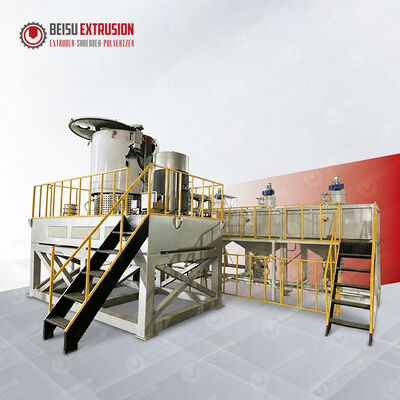
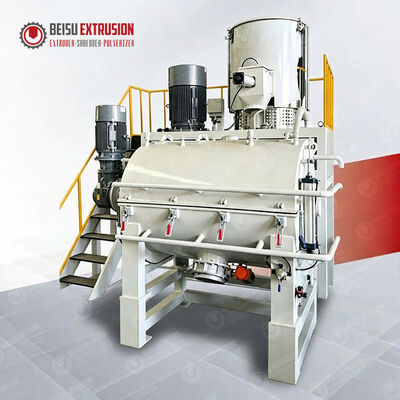
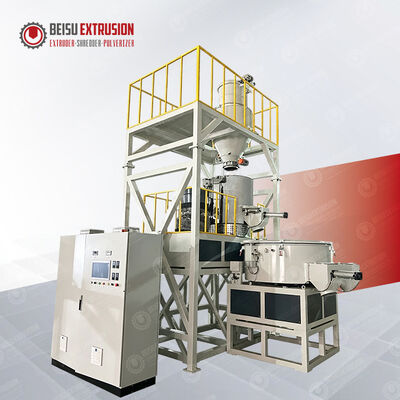
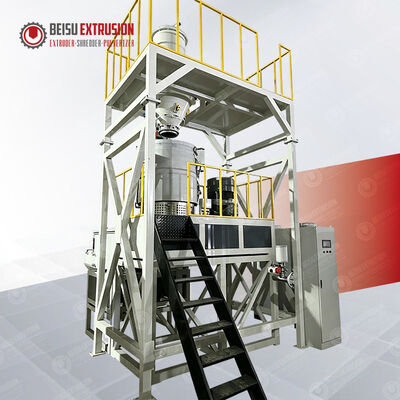
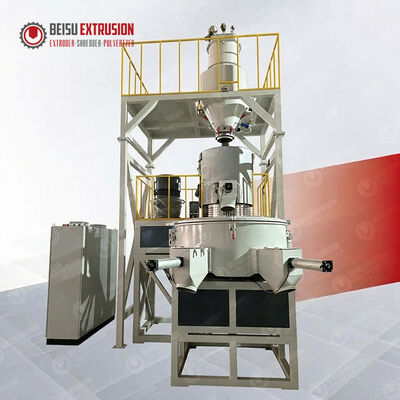
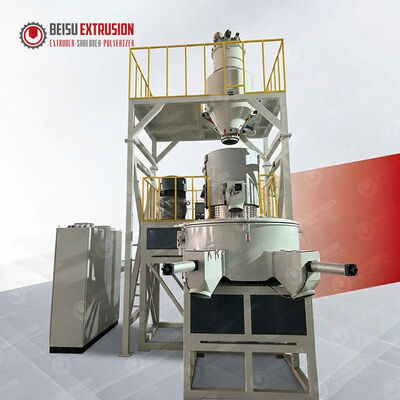
SHR-2000 Powder Modification Machine - Front View SHR-2000 Powder Modification Machine - Side View SHR-2000 Powder Modification Machine - Control Panel SHR-2000 Powder Modification Machine - Mixing Chamber SHR-2000 Powder Modification Machine - Feeding System SHR-2000 Powder Modification Machine - Internal Components SHR-2000 Powder Modification Machine - Complete Setup
System Capabilities & Formulation
What materials can be processed in a high-speed powder modification mixing system?
  • Inorganic Mineral Powders: Heavy/Light Calcium Carbonate (CaCO₃), Talc, Kaolin, Silica (SiO₂), Barium Sulfate (BaSO₄), Aluminum Hydroxide (ATH), and Titanium Dioxide (TiO₂).
  • Polymer Powders: PVC resin, PE/PP powders, EVA, and engineering plastics.
  • Modifying Agents: Stearic acid, silane coupling agents (KH-550, KH-570), titanates, aluminates, and paraffin waxes.
What is the typical modifier dosage, and how is it calculated?
  • Modifiers typically range between 0.5% - 2.0% by weight of the raw powder.
  • The exact dosage depends on the particle fineness (mesh/D50 size) and total surface area (BET value). Finer powders (e.g., 2500 mesh vs. 800 mesh) require a higher percentage of modifier to achieve complete monolayer coverage.
Dosing & Weighing Precision
How accurate are the automatic weighing and dosing feeders?
  • Major Ingredients (Resin, CaCO₃): Measured via Gain-in-Weight (GIW) hoppers with ± 0.2% - 0.5% batch accuracy.
  • Minor Additives (Modifiers, Lubricants, Pigments): Dosed via Loss-in-Weight (LIW) screw feeders or micro-dosing systems with precision down to ± 1 g - 5 g.
How does the system handle sticky or moisture-sensitive modifiers?
Liquid modifying agents (like silanes or melted stearic acid) are kept in temperature-controlled, jacketed dosing tanks and delivered via atomizing spray nozzles into the mixer under high shear to prevent clumping.
Operations, Quality & Performance
How do I verify if the powder surface has been successfully modified?
High-performance modification systems achieve an activation index > 98% - 99% for minerals like calcium carbonate.
Why is a cooling mixer required after high-speed hot mixing?
Friction in the high-speed hot mixer elevates compound temperature to 110°C - 125°C. Dropping the temperature rapidly to 40°C - 50°C in a cooling mixer locks in the surface treatment, eliminates residual gases, and prevents material agglomeration, caking, or thermal degradation during storage.
How does the system prevent dust emissions in the workshop?
The entire line operates under closed pneumatic conveying or sealed tubular screws connected to a centralized pulse-jet bag filter dust collector. This maintains negative pressure balance at loading points, weighing hoppers, and mixing vessels.

Contact Details
Zhangjiagang Beisu Machinery Co., Ltd.

Contact Person: Mr. Batsita

Tel: 86-13913294389

Fax: 86-512-58968376

Send your inquiry directly to us (0 / 3000)